| |   Thursday after Ash Wednesday Thursday after Ash Wednesday Violet or Purple Vestments
Missa "Dum clamarem"
Commemoration of the holy martyr Saint Nestor, Bishop |
Today's station - The Basilica of St. Nicholas - stands in the ancient forum olitorium near the theatre of Marcellus; during the Middle Ages it was raised to the status of a deaconry. The station at St. George's was instituted by St. Gregory II (715-31), when the cultus of the great Cappadocian martyr had become exceedingly popular in Rome. A titular church already existed here in 482, as an inscription of that date mentions an Augustus lector de Belabru, but the dedication to St. George was certainly of later date. Today's Gospel, telling of the centurion of Capharnaum, alludes to the military character ascribed by tradition to St. George, which caused him to be specially invoked during the Middle Ages as the armed champion of the Christian family. The Mass is a call to penance. The Lesson from Isaias recalls the warning given to Ezechias of his approaching death; the thought of death is a powerful inducement to us to change our mode of life. If we would only realize that the moment of our passing from this world to eternity may come unawares, we would implore earnestly a space of time in which to do penance, and resolve to lead a good life. We want to thank the Friends of Our Lady of Fatima for expediting these resources of the Propers. Sources: Saint Andrew Daily Missal and the Marian Missal , 1945
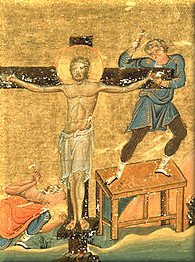 There is a commemoration today of Saint Nestor. EPOLIUS, whom the emperor Decius had appointed governor of Lycia, Pamphylia, and Phrygia, sought to make his court to that prince by surpassing his colleagues in the rage and cruelty with which he persecuted the meek disciples of Christ. At that time Nestor, bishop of Sida in Pamphylia, (as Le Quien demonstrates, not of Perge, or of Mandis, or Madigis, as some by mistake affirm,) was distinguished in those parts for his zeal in propagating the faith, and for the sanctity of his life. His reputation reached the governor, who sent an Irenarch to apprehend him. The martyr was conducted to Perge, and there crucified, in imitation of the Redeemer of the world, whom he preached. His triumph happened in 250. His Latin Acts, given by the Bollandists, are to be corrected by those in Greek, found among the manuscript acts of saints, honoured by the Greeks in the month of February, in the king's library at Paris, Cod. 2010, written in the tenth century. There is a commemoration today of Saint Nestor. EPOLIUS, whom the emperor Decius had appointed governor of Lycia, Pamphylia, and Phrygia, sought to make his court to that prince by surpassing his colleagues in the rage and cruelty with which he persecuted the meek disciples of Christ. At that time Nestor, bishop of Sida in Pamphylia, (as Le Quien demonstrates, not of Perge, or of Mandis, or Madigis, as some by mistake affirm,) was distinguished in those parts for his zeal in propagating the faith, and for the sanctity of his life. His reputation reached the governor, who sent an Irenarch to apprehend him. The martyr was conducted to Perge, and there crucified, in imitation of the Redeemer of the world, whom he preached. His triumph happened in 250. His Latin Acts, given by the Bollandists, are to be corrected by those in Greek, found among the manuscript acts of saints, honoured by the Greeks in the month of February, in the king's library at Paris, Cod. 2010, written in the tenth century.
Source: Rev. Alban Butler (1711–73). Volume II: February.
The Lives of the Saints. 1866.
https://www.bartleby.com/210/2/275.html
.
Go to the ORDINARY OF THE HOLY MASS MASS OF THE CATECHUMENS
Missa "Dum clamarem"
INTROIT: Psalm 54: 17, 19-20, 23 | | Dum clamárem ad Dóminum exaudivit vocem meam ab his, qui appropínquant mihi: et humiliávit eos, qui est ante sæcula, et manet in ætérnum: jacta cogitátum tuum in Dómino, et ipse te enútriet. (Ps. 54: 2, 3) Exaúdi, Deus, oratiónem meam, et ne despéxeris deprecatiónem meam: intende mihi, et exáudi me. V. Gloria Patri, et Filio, et Spiritui Sancto. Sicut erat in principio et nunc et semper et in saecula saeculorum. Amen.
Repeat Dum clamárem... |
| When I cried to the Lord, He heard my voice from them that draw near to me; and He humbled them, Who is before all ages, and remains forever: cast thy care upon the Lord, and He shall sustain thee. (Ps. 54: 2, 3) Hear, O God, my prayer, and despise not my supplication; be attentive to me and hear me. v. Glory be to the Father and to the Son and to the Holy Ghost, as it was in the beginning, is now and ever shall be, world without end. Amen.
Repeat When I cried to the Lord... |
|
Return to the ORDINARY OF THE HOLY MASS - Note from Septuagesima Sunday to Maundy Thursday there is no Gloria THE MASS OF THE CATECHUMENS
COLLECT| | | Dominus vobiscum. R. Et cum spiritu tuo. Oremus. Deus, qui culpa offénderis, pœniténtia placaris. preces pópuli tui supplicántis propitius réspice; et flagélla tuæ iracúndiæ, quæ pro peccatis nostris merémur, avérte. Per Dominum nostrum Jesum Christum, Qui Tecum vivit et regnat in unitate Spiritus Sancti, Deus,
Per omnia saecula saeculorum.
R. Amen. |
| | The Lord be with you. R. And with thy spirit. Let us pray. God, Who art offended by sin, and appeased by penance, graciously regard the prayers of Thy people making supplication to Thee, and turn aside the scourge of Thy anger, which we deserve for our sins. Through Jesus Christ our Lord, Who liveth and reigneth with Thee in the unity of the Holy Ghost, one God
Forever and ever.
R.Amen. |
|
EPISTLE: Joel 2: 12-19 | | Léctio Isaiæ Prophétæ.In diebus illis: Ægrotávit Ezechías usque ad mortem: et introívit ad eum Isaías fílius Amos prophéta, et dixit ei: Hæc dicit Dóminus: Dispóne dómui tuæ, quia moriéris tu, et non vives. Et convértit Ezechías fáciem suam ad paríetem, et orávit ad Dóminum, et dixit: Obsecro, Dómine, meménto quæso, quómodo ambuláverim coram te in veritáte, et in corde perfécto, et quod bonum est in óculis tuis fécerim. Et flevit Ezéchias fletu magno. Et factum est verbum Dómini ad Isaíam, dicens: Vade, et dic Ezechíæ: Hæc dicit Dóminus Deus David patris tui: Audívi oratiónem tuam, et vidi lácrimas tuas: ecce ego adjíciam super dies tuos quíndecim annos: et de manu regis Assyriórum éruam te, et civitátem istam, et prótegam eam, ait Dóminus omnípotens.
Deo Gratias. |
| Lesson from Isaias the Prophet.In those days, Ezechias, was sick even to death; and Isaias the son of Amos the prophet came unto him, and said to Him, Thus saith the Lord, Take order with thy house, for thou shalt die, and not live. And Ezechias turned his face toward the wall, and prayed to the Lord, and said, I beseech Thee, O Lord, remember how I have walked before Thee in truth, and with a perfect heart, and have done that which is good in thy sight. And Ezechias wept with great weeping. And the word of the Lord came to Isaias, saying, Go, and say to Ezechias, Thus saith the Lord, the God of David thy father: I have heard thy prayer and I have seen thy tears: behold I will add to thy days fifteen years; and I will deliver thee and this city out of the hand of the king of the Assyrians, and I will protect it; said the Lord almighty.
Thanks be to God. |
|
GRADUAL Psalm 54: 23, 17-19 | | | Jacta cogitátum tuum in Dómino, et ipse te enútriet. V. Dum clamárem ad Dóminum, exaudívit vocem meam ab his, qui appropínquant mihi. |
| | Cast thy care upon the Lord, and He shall sustain thee. V. When I cried to the Lord, He heard my voice from them that draw near to me. |
|
GOSPEL: Matthew 8: 5-13| | Dominus vobiscum.
R. Et cum spiritu tuo.
Sequentia sancti Evangelii secundum Matthaeum.
R.Gloria tibi, Domine In illo tempore : Cum introísset Jesus Caphárnaum, accéssit ad eum centúrio, rogans eum, et dicens: Dómine, puer meus jacet in domo paralyticus et male torquétur. Et ait illi Jesus: "Ego véniam, et curábo eum." Et respóndens centúrio, ait: Dómine, non sum dignus, ut intres sub tectum meum: sed tantum dic verbo, et sanábitur puer meus. Nam et ego homo sum sua potestáte constitútus, habens sub me mílites, et dico huic: Vade, et vadit; et álii: Veni, et venit; et servo meo: Fac hoc, et facit. Audiens autem Jesus mirátus est, et sequéntibus se dixit: "Amen dico vobis, non invéni tantam fidem in Israël. Dico autem vobis, quod multi ab Oriénte, et Occidénte vénient, et recúmbent cum Abraham, et Isaac, et Jacob in regno cælórum: fílii autem regni ejiciéntur in ténebras exterióres: ibi erit fetus, et stridor déntium." Et dixit Jesus centurióni: "Vade, et sicut credidísti, fiat tibi." Et sanátus est puer in illa hora.
Laus tibi Christe. |
| The Lord be with you.
R. And with thy spirit.
The continuation of the holy Gospel according to Matthew.
R. Glory to Thee, O Lord At that time, when Jesus had entered into Capharnaum, there came to Him a centurion, beseeching Him, and saying, Lord, my servant lieth at home sick of the palsy, and is grievously tormented. And Jesus said to him: "I will come and heal him." And the centurion making answer said: Lord, I am not worthy that Thou shouldst enter under my roof: but only say the word, and my servant shall be healed.For I also am a man subject to authority, having under me soldiers; and I say to this man, Go, and he goeth, and to another, Come, and he cometh, and to my servant, Do this, and he doeth it. And Jesus hearing this marvelled; and said to them that followed Him: "Amen I say to you, I have not found so great faith in Israel. And I say to you that many shall come from the east and from the west, and shall sit down with Abraham, and Isaac, and Jacob in the kingdom of heaven: but the children of the kingdom shall be cast out into exterior darkness: there shall be weeping and gnashing of teeth." And Jesus said to the centurion: "Go, and as thou hast believed, so be it done to thee." And the servant was healed at the same hour.
Praise be to Christ |
|
Return to the ORDINARY OF THE HOLY MASS THE OFFERTORY
OFFERTORY: Psalm 24: 1-3 | | Dominus vobiscum.
R. Et cum spiritu tuo.
Ad te, Dómine, levávi ánimam meam: Deus meus, in te confído, non erubéscam: neque irrídeant me inimíci mei: étenim univérsi, qui te exspéctant, non confundéntur. |
| The Lord be with you.
R. And with thy spirit.
To Thee, O Lord, have I lifted up my soul: In Thee, O my God, I put my trust: let me not be ashamed: neither let my enemies laugh at me: for none of them that wait on Thee shall be confounded. |
|
Return to the ORDINARY OF THE HOLY MASS THE OFFERTORY
The Second and Third Secrets are the same for each Mass until Passion Sunday
SECRET| | Dominus vobiscum.
R. Et cum spiritu tuo.
Sacrifíciis præséntibus, Dómine, quæsumus, inténde placátus: ut et devotióni nostræ profíciant, et salúti. Per Dominum nostrum Jesum Christum, Filius tuus Dominus noster, Qui Tecum vivit et regnat in unitate Spiritus Sancti, Deus,
Per omnia saecula saeculorum.
R. Amen. |
| The Lord be with you.
R. And with thy spirit.
Be appeased, O Lord, We beseech Thee, and look upon the sacrifices here before Thee, that they may profit both our devotion and our salvation. Through our Lord Jesus Christ Thy Son. Who liveth and reigneth with Thee in the unity of the Holy Ghost, one God
Forever and ever.
R.Amen. |
|
PREFACE FOR LENT| | Dominus vobiscum.
R. Et cum spiritu tuo.
Sursum corda.
R.Habemus ad Dominum.
Gratias agamus Domino Deo nostro.
R. Dignum et justum est.
Vere dignum et justum est, aequum et salutare, nos tibi semper, et ubique gratias agere: Domine sancte, Pater Omnipotens, aeterne Deus. Qui corporali jejunio vitia comprimis, mentem elevas, virtutem largiris et praemia : per Christum Dominum nostrum. Per quem majestatem tuam laudant Angeli, adorant Dominationes, tremunt Potestates. Coeli, caelorumque Virtutes, ac beata Seraphim, socia exsultatione concelebrant. Cum quibus et nostras voces, ut admitti jubeas deprecamur, supplici confessione dicentes:
SANCTUS, SANCTUS, SANCTUS... |
| The Lord be with you.
R. And with thy spirit.
Lift up your hearts.
R.We have lifted them up to the Lord.
Let us give thanks to the Lord our God.
R. It is meet and just.
It is truly meet and just, right and for our salvation that we should at all times, and in all places, give thanks unto Thee, O holy Lord, Father almighty, everlasting God: Who by this bodily fast, dost curb our vices, dost lift up our minds and bestow on us strength and rewards; through Christ our Lord. Through whom the Angels praise Thy Majesty, the Dominations worship it, the Powers stand in awe. The Heavens and the heavenly hosts together with the blessed Seraphim in triumphant chorus unite to celebrate it. Together with these we entreat Thee that Thou mayest bid our voices also to be admitted while we say with lowly praise:
HOLY, HOLY, HOLY... |
|
Return to the ORDINARY OF THE HOLY MASS THE CANON OF THE MASS
COMMUNION: Psalm 50: 21| | | Acceptábis sacrifícium justítiæ, oblatiónes, et holocáusta, super altáre tuum, Dómine. |
| | Thou wilt accept the sacrifice of justice, oblations, and holocausts, upon Thy altar, O Lord. |
|
POSTCOMMUNION| | Dominus vobiscum.
R. Et cum spiritu tuo.
Oremus. Cælestis doni benedictióne percépta: súpplices te, Deus omnípotens, deprecámur; ut hoc idem nobis et sacraménti causa sit, et salútis. Per Dominum nostrum Jesum Christum. Qui vivis et regnas in cum Deo Patri in unitate Spiritus Sancti, Deus, unum Deum.
Per omnia saecula saeculorum.
R. Amen. |
| | The Lord be with you.
R. And with thy spirit.
Let us pray. Having received the blessing of the heavenly gift, we beseech and supplicate Thee, O almighty God, that the same may be the cause both of the sacrament and of salvation. Through our Lord Jesus Christ, Who livest and reignest, with God the Father, in the unity of the Holy Ghost, one God
For ever and ever.
R. Amen. |
|
PRAYER OVER THE PEOPLE| | Oremus. Humiliate capita vestra Deo. Parce, Dómine, parce pópulo Tuo: ut dignis flagellationibus castigatus, in Tua miseratione respiret. Per Dominum nostrum Jesum Christum. Qui vivis et regnas in cum Deo Patri in unitate Spiritus Sancti, Deus, unum Deum.
Per omnia saecula saeculorum.
R. Amen. |
| Let us pray. Bow down your heads before God. Spare, O Lord, spare Thy people; that having been punished with deserved scourges, they may find relief in Thy mercy. Through our Lord Jesus Christ, Who livest and reignest, with God the Father, in the unity of the Holy Ghost, one God
For ever and ever.
R. Amen. |
|
Return to the ORDINARY OF THE HOLY MASS CONCLUSION OF THE HOLY MASS

FERIA / Thursday after Ash Wednesday
|
|





