|
|
| ||||

|
 EDITOR'S NOTE: Father Krier, pastor of St. Joseph's Catholic Church in Las Vegas, has graciously given permission to republish his email series begun early this year to reach as many souls as possible. If you would like to subscribe to his weekly Catholic Tradition Newsletter, click here or go to the parish website at St. Joseph's Traditional Catholic Church. We are grateful to Father for this opportunity to spread the truths of our holy Faith as we hope and pray that, after reading and praying over what he has to say, you will realize there is only one choice. But you have a free will so what will your choice be for the health of your eternal soul? EDITOR'S NOTE: Father Krier, pastor of St. Joseph's Catholic Church in Las Vegas, has graciously given permission to republish his email series begun early this year to reach as many souls as possible. If you would like to subscribe to his weekly Catholic Tradition Newsletter, click here or go to the parish website at St. Joseph's Traditional Catholic Church. We are grateful to Father for this opportunity to spread the truths of our holy Faith as we hope and pray that, after reading and praying over what he has to say, you will realize there is only one choice. But you have a free will so what will your choice be for the health of your eternal soul?
 This series is to address the present situation of the Roman Catholic Church. Some introductory points are necessary to state and these are: first, there is no Papal authority to impose one’s conclusions as placing those who disagree under any ecclesiastical censure or penalty; secondly, there cannot be a rejection of Catholics in good faith who are misled by the Conciliar Church—we all came to the conclusion that the Conciliar Church is not the Roman Catholic Church after prayer and careful reflection by the grace of God and no one 50 years of age and older can say they were not participants of their local parish post-Vatican II (though many can say they left once the Novus Ordo Missae was introduced) and yet each held oneself as Catholic—I am not looking at refusing those who hold they are true Catholics the sacraments and this is based on the model of the Western Schism; thirdly, the recognition of validity of sacraments cannot simply be based on a complete rejection of the Conciliar Church and therefore a complete rejection of their administration of sacraments, but it must be based upon the Sacramental teaching of the Roman Catholic Church; fourthly, the preservation of the faith is absolutely necessary for the constitution of the Church as Christ founded and the faith is not an end in itself, but necessary to obtain the end for which the Church was founded, which is the salvation of souls. It is the cessation of seeking the salvation of souls that has caused a recognition that the Conciliar (Vatican II) Church as not Roman Catholic and the leader of the Conciliar Church as not the visible head of the Roman Catholic Church. It is the removal of the center or heart of Catholic faith, the Holy Sacrifice of the Mass, that shocked Catholics and caused them to abandon the temple where the abomination of desolation was taking place. As Catholics stayed home, prayed the Rosary and continued to wear their Brown Scapulars they were soon able to hear of Roman Catholic clergy who retained the faith and administered the Sacraments and celebrated Holy Mass. These clergy and laity together started Mass Centers (as they would be labeled) throughout the world and so the Catholic Church continues as promised: I will be with you, all days, even to the consummation of the world (Matt. 28: 20). It has been a test of faith, a time of tribulation, of son against father and daughter against mother (cf. Luke 12:53); but one knows we ought to obey God, rather than men (Acts 5:29).
|
|
c. The Catholicity of the Church is seen in that of her presence always and everywhere throughout the world, being that the Church is for the salvation of all. She is not confined to a certain people, or place or time. Possessing the unity of faith and the means of sanctity as Christ founded the Church, all men who seek the Church can find her and be received within her bosom. Our Lord gave the command to His Apostles: It is substantiated in the New Testament not only by the quote already provided from Matthew, but also from the following examples: And they sang a new canticle, saying, ‘Worthy art Thou to take the scroll and to open its seals; For Thou wast slain, and hast redeemed us for God with Thy Blood, out of every tribe and tongue and people and nation, and hast made them for our God a kingdom and priests, and they shall reign over the earth’ (Apoc. 5:9-10). And this Gospel of the kingdom shall be preached in the whole world, for a witness to all nations; and then will come the end (Matt. 14:14). And you shall be witnesses for Me in Jerusalem and in all Judea and Samaria and even to the very ends of the earth (Acts 1:8). Saint Augustine instructs Vincentius, a member of a Donatist sect, as to the concept of Catholic in these words (Letter 93, 7, 23):
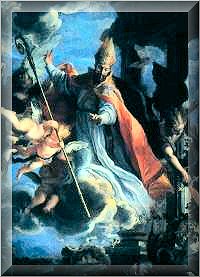 that the Rogatists alone remain worthy of the name Catholics, on the ground of their observing all the Divine precepts and all the sacraments; and that you are the only persons in whom the Son of man when He comes shall find faith. [Luke 17:8] You must excuse me for saying we do not believe a word of this. For although, in order to make it possible for that faith to be found in you which the Lord said that He would not find on the earth, you may perhaps presume even to say that you are to be regarded as in heaven, not on earth, we at least have profited by the apostle’s warning, wherein he has taught us that even an angel from heaven must be regarded as accursed if he were to preach to us any other gospel than that which we have received. [Galatians 1:8] But how can we be sure that we have indisputable testimony to Christ in the Divine Word, if we do not accept as indisputable the testimony of the same Word to the Church? For as, however ingenious the complex subtleties which one may contrive against the simple truth, and however great the mist of artful fallacies with which he may obscure it, any one who shall proclaim that Christ has not suffered, and has not risen from the dead on the third day, must be accursed— because we have learned in the truth of the gospel, that it behooved Christ to suffer, and to rise from the dead on the third day; [Luke 24:46] — on the very same grounds must that man be accursed who shall proclaim that the Church is outside of the communion which embraces all nations: for in the next words of the same passage we learn also that repentance and remission of sins should be preached in His name among all nations, beginning at Jerusalem; [Luke 24:47] and we are bound to hold firmly this rule, If any preach any other gospel unto you than that you have received, let him be accursed. [Galatians 1:9] that the Rogatists alone remain worthy of the name Catholics, on the ground of their observing all the Divine precepts and all the sacraments; and that you are the only persons in whom the Son of man when He comes shall find faith. [Luke 17:8] You must excuse me for saying we do not believe a word of this. For although, in order to make it possible for that faith to be found in you which the Lord said that He would not find on the earth, you may perhaps presume even to say that you are to be regarded as in heaven, not on earth, we at least have profited by the apostle’s warning, wherein he has taught us that even an angel from heaven must be regarded as accursed if he were to preach to us any other gospel than that which we have received. [Galatians 1:8] But how can we be sure that we have indisputable testimony to Christ in the Divine Word, if we do not accept as indisputable the testimony of the same Word to the Church? For as, however ingenious the complex subtleties which one may contrive against the simple truth, and however great the mist of artful fallacies with which he may obscure it, any one who shall proclaim that Christ has not suffered, and has not risen from the dead on the third day, must be accursed— because we have learned in the truth of the gospel, that it behooved Christ to suffer, and to rise from the dead on the third day; [Luke 24:46] — on the very same grounds must that man be accursed who shall proclaim that the Church is outside of the communion which embraces all nations: for in the next words of the same passage we learn also that repentance and remission of sins should be preached in His name among all nations, beginning at Jerusalem; [Luke 24:47] and we are bound to hold firmly this rule, If any preach any other gospel unto you than that you have received, let him be accursed. [Galatians 1:9]And he continues elsewhere (Letter 185, 1, 5) :
Nearly every page is nothing than Christ's voice, that the Church is to be diffused in all the world. It strikes me as a voice for the Donatists: What is this wonderful thing I seek? That the Church is to be diffused in all the world was not said to be lost. Is there so many testimonies remaining that predict its loss? Not one voice is there throughout the Law, the Prophets, the Songs, of the pastor—not that they were able to speak the truth without the Word of God, which is Christ-listen to the voice of the Word, and from the mouth of the Word. Saint Thomas fully agrees with Saint Augustine in these words:
 . . . Secondly, the Church is universal in regard to all the conditions of mankind; for no exceptions are made, neither master nor servant, neither man nor woman: "Neither bond nor free; there is neither male nor female" [Gal 3:28]. Thirdly, it is universal in time. Some have said that the Church will exist only up to a certain time. But this is false, for the Church began to exist in the time of Abel and will endure up to the end of the world. . . even after the end of the world, it will continue to exist in Heaven. (Apostle’s Creed, art. ix.) . . . Secondly, the Church is universal in regard to all the conditions of mankind; for no exceptions are made, neither master nor servant, neither man nor woman: "Neither bond nor free; there is neither male nor female" [Gal 3:28]. Thirdly, it is universal in time. Some have said that the Church will exist only up to a certain time. But this is false, for the Church began to exist in the time of Abel and will endure up to the end of the world. . . even after the end of the world, it will continue to exist in Heaven. (Apostle’s Creed, art. ix.)The Roman Catechism imparts this instruction:
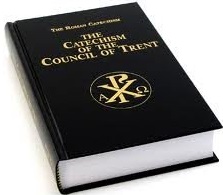 "Ask of me, and I will give thee the Gentiles for thy inheritance, and the utmost parts of the earth for thy possession:" [Ps. ii. 8.] and also, "I will be mindful of Rahab and of Babylon knowing me:" [Ps. lxxxvi 4.] and "This man and that man is born in her:" [Ps. lxxxvi. 5.] To this Church, "built on the foundation of the Apostles and Prophets," [Eph. ii. 20.] belong all the faithful who have existed from Adam to the present day, or who shall exist, in the profession of the true faith, to the end of time; all of whom are founded and raised upon the one corner stone, Christ, Who made both one, and announced peace to them that are near, and to them that are afar. She is, also, called universal, because all who desire eternal salvation must cling to and embrace her, like those who entered the ark, to escape perishing in the flood. [Gen. vii.7.] "Ask of me, and I will give thee the Gentiles for thy inheritance, and the utmost parts of the earth for thy possession:" [Ps. ii. 8.] and also, "I will be mindful of Rahab and of Babylon knowing me:" [Ps. lxxxvi 4.] and "This man and that man is born in her:" [Ps. lxxxvi. 5.] To this Church, "built on the foundation of the Apostles and Prophets," [Eph. ii. 20.] belong all the faithful who have existed from Adam to the present day, or who shall exist, in the profession of the true faith, to the end of time; all of whom are founded and raised upon the one corner stone, Christ, Who made both one, and announced peace to them that are near, and to them that are afar. She is, also, called universal, because all who desire eternal salvation must cling to and embrace her, like those who entered the ark, to escape perishing in the flood. [Gen. vii.7.]
This, therefore, is to be taught as a most just criterion, to distinguish the true from a false Church. In Satis Cognitum, Leo XIII provides this quality of Catholicism:
 it is necessary that this Church should be one in all lands and at all times. To justify the existence of more than one Church it would be necessary to go outside this world, and to create a new and unheard-of race of men. That the one Church should embrace all men everywhere and at all times was seen and foretold by Isaias, when looking into the future he saw the appearance of a mountain conspicuous by its all surpassing altitude, which set forth the image of "The House of the Lord" - that is, of the Church, "And in the last days the mountain of the House of the Lord shall be prepared on the top of the mountains" (Isa. ii., 2). it is necessary that this Church should be one in all lands and at all times. To justify the existence of more than one Church it would be necessary to go outside this world, and to create a new and unheard-of race of men. That the one Church should embrace all men everywhere and at all times was seen and foretold by Isaias, when looking into the future he saw the appearance of a mountain conspicuous by its all surpassing altitude, which set forth the image of "The House of the Lord" - that is, of the Church, "And in the last days the mountain of the House of the Lord shall be prepared on the top of the mountains" (Isa. ii., 2).Drawing from these sources, all theologians present the same understanding of the meaning Catholic.

|
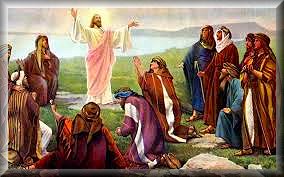 Going therefore, teach ye all nations; baptizing them in the name of the Father, and of the Son, and of the Holy Ghost. Teaching them to observe all things whatsoever I have commanded you: and behold I am with you all days, even to the consummation of the world. (Matt 28:19-20; cf. Mark 16:15-16) Moral catholicity suffices for the concept of Catholicity. Nevertheless it is Christ’s will that the Church constantly endeavor to extend—the ideal is physical Catholicity. The prophetic Scriptures of the Old Testament point to this catholicity as for example the following: In thee shall all the kindred of the earth be blessed (Gen. 12:3); and, Ask of me, and I will give thee the Gentiles for thy inheritance, and the utmost parts of the earth for thy possession (Ps. 2: 8). Further, And in the last days the mountains of the house of the Lord shall be prepared on the top of mountains, and it shall be exalted above the hills, and all nations shall flow unto it (Isai. 2:2). Finally, For from the rising if the sun even to the going down, my name is great among the Gentiles, and in every place there is sacrifice, and there is offered to my name a clean oblation: for my name is great among the Gentiles, saith the Lord of hosts (Mal. 1:11).





