|
|
| ||||

|
 EDITOR'S NOTE: Father Krier, pastor of St. Joseph's Catholic Church in Las Vegas, has graciously given permission to republish his email series begun early this year to reach as many souls as possible. If you would like to subscribe to his weekly Catholic Tradition Newsletter, click here or go to the parish website at St. Joseph's Traditional Catholic Church. We are grateful to Father for this opportunity to spread the truths of our holy Faith as we hope and pray that, after reading and praying over what he has to say, you will realize there is only one choice. But you have a free will so what will your choice be for the health of your eternal soul? EDITOR'S NOTE: Father Krier, pastor of St. Joseph's Catholic Church in Las Vegas, has graciously given permission to republish his email series begun early this year to reach as many souls as possible. If you would like to subscribe to his weekly Catholic Tradition Newsletter, click here or go to the parish website at St. Joseph's Traditional Catholic Church. We are grateful to Father for this opportunity to spread the truths of our holy Faith as we hope and pray that, after reading and praying over what he has to say, you will realize there is only one choice. But you have a free will so what will your choice be for the health of your eternal soul?
 This series is to address the present situation of the Roman Catholic Church. Some introductory points are necessary to state and these are: first, there is no Papal authority to impose one’s conclusions as placing those who disagree under any ecclesiastical censure or penalty; secondly, there cannot be a rejection of Catholics in good faith who are misled by the Conciliar Church—we all came to the conclusion that the Conciliar Church is not the Roman Catholic Church after prayer and careful reflection by the grace of God and no one 50 years of age and older can say they were not participants of their local parish post-Vatican II (though many can say they left once the Novus Ordo Missae was introduced) and yet each held oneself as Catholic—I am not looking at refusing those who hold they are true Catholics the sacraments and this is based on the model of the Western Schism; thirdly, the recognition of validity of sacraments cannot simply be based on a complete rejection of the Conciliar Church and therefore a complete rejection of their administration of sacraments, but it must be based upon the Sacramental teaching of the Roman Catholic Church; fourthly, the preservation of the faith is absolutely necessary for the constitution of the Church as Christ founded and the faith is not an end in itself, but necessary to obtain the end for which the Church was founded, which is the salvation of souls. It is the cessation of seeking the salvation of souls that has caused a recognition that the Conciliar (Vatican II) Church as not Roman Catholic and the leader of the Conciliar Church as not the visible head of the Roman Catholic Church. It is the removal of the center or heart of Catholic faith, the Holy Sacrifice of the Mass, that shocked Catholics and caused them to abandon the temple where the abomination of desolation was taking place. As Catholics stayed home, prayed the Rosary and continued to wear their Brown Scapulars they were soon able to hear of Roman Catholic clergy who retained the faith and administered the Sacraments and celebrated Holy Mass. These clergy and laity together started Mass Centers (as they would be labeled) throughout the world and so the Catholic Church continues as promised: I will be with you, all days, even to the consummation of the world (Matt. 28: 20). It has been a test of faith, a time of tribulation, of son against father and daughter against mother (cf. Luke 12:53); but one knows we ought to obey God, rather than men (Acts 5:29).
|
|
In continuing, the Church must be One, Holy, Catholic and Apostolic. I believe in one, holy, Catholic, and apostolic Church. (Niceno-Constantinopolitan Creed). d. The Last mark of the Church is that of Apostolicity. Van Noort explains it as follows: According to Catholic teaching, Christ's Church essentially and necessarily enjoys a triple sort of apostolicity: apostolicity of doctrine, government, and membership. (Noort, 151) He then goes on to explain each:
Apostolicity of government—or mission, or authority-means the Church is always ruled by pastors who form one same juridical person with the apostles. In other words it is always ruled by pastors who are the apostles' legitimate successors. It has already been proved that Christ Himself founded a living organization, a visible Church. Granted that fact, it should be obvious that an essential part of that Church's structure is apostolicity of government. "For on no one but the apostolic college, under the headship of Peter, did Christ confer the power of teaching, sanctifying, and ruling the faithful until the end of the world." This triple power, therefore, necessarily belongs, and can only belong, to those who form one moral person with the apostles: their legitimate successors. Apostolicity of membership means that the Church in any given age is and remains numerically the same society as that planted by the apostles. . . . Here it is asserted that the entire membership of the Church is likewise apostolic. Apostolicity of membership follows as an inescapable consequence of apostolicity of government. A moral body, despite the fact that it constantly undergoes change and renovation in its personnel, remains numerically the same moral body so long as it retains the same social structure and the same authority. . . (ibid. 150-51, 154) Further, Tanqueray points out:
We say Bishops collectively taken, because only the college of Bishops was made the heir of the Apostolic College. (Vol. II., 111) That the Church is built upon the foundation of the Apostle’s is clear in Scripture. In speaking to the Apostles, Christ expresses it in the following quotes:
Going therefore, teach ye all nations; baptizing them in the name of the Father, and of the Son, and of the Holy Ghost. Teaching them to observe all things whatsoever I have commanded you: and behold I am with you all days, even to the consummation of the world. (Matt 28:19-20; cf. Mark 16:15-16) He that receiveth you, receiveth Me: and he that receiveth Me, receiveth Him that sent Me. (Matt. 10:40) He that heareth you, heareth Me; and he that despiseth you, despiseth Me; and he that despiseth Me, despiseth Him that sent Me. (Luke 10:16) Amen I say to you, whatsoever you shall bind upon earth, shall be bound also in Heaven; and whatsoever you shall loose upon earth, shall be loosed also in Heaven. (Mt. 18:18) The Catechism of the Council of Trent expresses the apostolicity of the Church in this way: 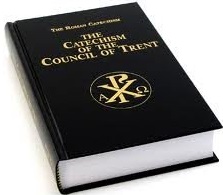 The true Church is, also, to be known from her origin, which she derives under the law of grace, from the Apostles; for her doctrines are neither novel nor of recent origin, but were delivered, of old, by the Apostles, and disseminated throughout the world. Hence, no one can, for a moment, doubt that the impious opinions which heresy invents, opposed, as they are, to the doctrines taught by the Church from the days of the Apostles to the present time, are very different from the faith of the true Church. That all, therefore, may know the true Catholic Church, the Fathers, guided by the Spirit of God, added to the Creed the word "APOSTOLIC;" for the Holy Ghost, who presides over the Church, governs her by no other than Apostolic men; and this Spirit, first imparted to the Apostles, has, by the infinite goodness of God, always continued in the Church. But as this one Church, because governed by the Holy Ghost, can not err in faith or morals, it necessarily follows, that all other societies arrogating to themselves the name of Church, because guided by the spirit of darkness, are sunk in the most pernicious errors both doctrinal and moral. (I, ix) The true Church is, also, to be known from her origin, which she derives under the law of grace, from the Apostles; for her doctrines are neither novel nor of recent origin, but were delivered, of old, by the Apostles, and disseminated throughout the world. Hence, no one can, for a moment, doubt that the impious opinions which heresy invents, opposed, as they are, to the doctrines taught by the Church from the days of the Apostles to the present time, are very different from the faith of the true Church. That all, therefore, may know the true Catholic Church, the Fathers, guided by the Spirit of God, added to the Creed the word "APOSTOLIC;" for the Holy Ghost, who presides over the Church, governs her by no other than Apostolic men; and this Spirit, first imparted to the Apostles, has, by the infinite goodness of God, always continued in the Church. But as this one Church, because governed by the Holy Ghost, can not err in faith or morals, it necessarily follows, that all other societies arrogating to themselves the name of Church, because guided by the spirit of darkness, are sunk in the most pernicious errors both doctrinal and moral. (I, ix)And Saint Charles Borromeo refers us to Tertullian’s Prescription against Heretics, where, in chapter 27 he states:  Since, therefore, it is incredible that the apostles were either ignorant of the whole scope of the message which they had to declare, or failed to make known to all men the entire rule of faith, let us see whether, while the apostles proclaimed it, perhaps, simply and fully, the churches, through their own fault, set it forth otherwise than the apostles had done. All these suggestions of distrust you may find put forward by the heretics. They bear in mind how the churches were rebuked by the apostle: O foolish Galatians, who has bewitched you? Galatians 3:1 and, You did run so well; who has hindered you? Galatians 5:7 and how the epistle actually begins: I marvel that you are so soon removed from Him, who has called you as His own in grace, to another gospel. Galatians 1:6 That they likewise (remember), what was written to the Corinthians, that they were yet carnal, who required to be fed with milk, being as yet unable to bear strong meat; who also thought that they knew somewhat, whereas they knew not yet anything, as they ought to know. 1 Corinthians 8:2 When they raise the objection that the churches were rebuked, let them suppose that they were also corrected; let them also remember those (churches), concerning whose faith and knowledge and conversation the apostle rejoices and gives thanks to God, which nevertheless even at this day, unite with those which were rebuked in the privileges of one and the same institution. Since, therefore, it is incredible that the apostles were either ignorant of the whole scope of the message which they had to declare, or failed to make known to all men the entire rule of faith, let us see whether, while the apostles proclaimed it, perhaps, simply and fully, the churches, through their own fault, set it forth otherwise than the apostles had done. All these suggestions of distrust you may find put forward by the heretics. They bear in mind how the churches were rebuked by the apostle: O foolish Galatians, who has bewitched you? Galatians 3:1 and, You did run so well; who has hindered you? Galatians 5:7 and how the epistle actually begins: I marvel that you are so soon removed from Him, who has called you as His own in grace, to another gospel. Galatians 1:6 That they likewise (remember), what was written to the Corinthians, that they were yet carnal, who required to be fed with milk, being as yet unable to bear strong meat; who also thought that they knew somewhat, whereas they knew not yet anything, as they ought to know. 1 Corinthians 8:2 When they raise the objection that the churches were rebuked, let them suppose that they were also corrected; let them also remember those (churches), concerning whose faith and knowledge and conversation the apostle rejoices and gives thanks to God, which nevertheless even at this day, unite with those which were rebuked in the privileges of one and the same institution.
Finally, Pope Leo XIII gives a wonderful outlay of apostolicity and indefectibility in his encyclical, Satis Cognitum:
One can see, then, that apostolicity subsists in apostolic succession, apostolic teaching and a membership that has continued since the Apostles began their apostolic mission. These marks were reviewed because the Catholic Church must possess these four marks or, as the above quotes prove, the Church is not the Church Christ founded and therefore not the Catholic Church. As was said, the Church must possess these four marks. To possess these marks, the Church must also have the attributes that sustain their presence within her constitution. These attributes are infallibility, indefectibility and authority. They will be covered in the next section.

|
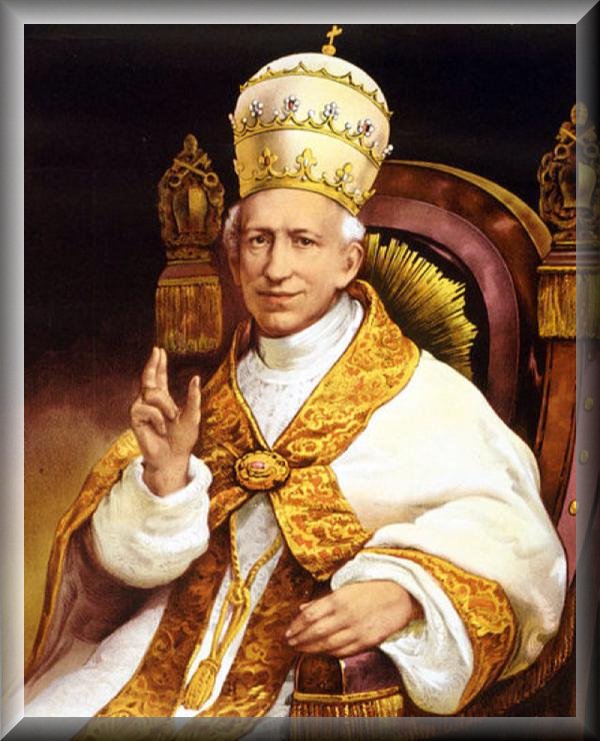 Nay more: they likewise required their successors to choose fitting men, to endow them with like authority, and to confide to them the office and mission of teaching. "Thou, therefore, my son, be strong in the grace which is in Christ Jesus: and the things which thou hast heard of me by many witnesses, the same command to faithful men, who shall be fit to teach others also" (2 Tim. ii., 1-2). Wherefore, as Christ was sent by God and the Apostles by Christ, so the Bishops and those who succeeded them were sent by the Apostles. "The Apostles were appointed by Christ to preach the Gospel to us. Jesus Christ was sent by God. Christ is therefore from God, and the Apostles from Christ, and both according to the will of God. . . . Preaching therefore the word through the countries and cities, when they had proved in the Spirit the first - fruits of their teaching they appointed bishops and deacons for the faithful. . . .They appointed them and then ordained them, so that when they themselves had passed away other tried men should carry on their ministry" (S. Clemens Rom. Epist. I ad Corinth. capp. 42, 44). On the one hand, therefore, it is necessary that the mission of teaching whatever Christ had taught should remain perpetual and immutable, and on the other that the duty of accepting and professing all their doctrine should likewise be perpetual and immutable. "Our Lord Jesus Christ, when in His Gospel He testifies that those who are not with Him are His enemies, does not designate any special form of heresy, but declares that all heretics who are not with Him and do not gather with Him, scatter His flock and are His adversaries: He that is not with Me is against Me, and he that gathereth not with Me scattereth" (S. Cyprianus, Ep. lxix., ad Magnum, n. I). (p. 8)





